What Happens If You Ignore a Small Commercial Roof Leak?
A small drip, water stain, or damp ceiling tile may not seem like an urgent problem—especially when your business has a long list of other priorities.
But when it comes to commercial roofing, visible water intrusion can be a sign that something needs attention.
A commercial roof leak doesn’t necessarily remain small. Water may travel through different layers of a roofing system before it becomes visible inside the building, making it difficult to determine the extent or source of the problem without a professional inspection.
For business owners and property managers in Southern Idaho, addressing signs of a roof leak early can help prevent additional damage, unexpected repairs, and disruptions to business operations.
Here are some of the potential consequences of ignoring a commercial roof leak.
1. Water Can Travel Beyond the Original Leak
One of the challenges with commercial roof leaks is that the location of the visible water isn’t always the location where water entered the roofing system.
Moisture can potentially travel along roof decking, insulation, structural components, pipes, or other building materials before becoming visible inside.
That means a ceiling stain in one part of your building doesn’t necessarily tell you exactly where the roof is compromised.
A professional commercial roof inspection can help trace the problem and evaluate the surrounding roofing system for additional concerns.
2. Wet Insulation Can Become a Larger Problem
Many commercial roofing systems include insulation beneath the exterior roofing membrane.
If water gets through the roofing system, that insulation may be exposed to moisture. Depending on the roofing assembly and extent of the intrusion, affected materials may need further evaluation.
The longer a leak continues, the greater the opportunity for moisture to spread beyond the original problem area.
Finding and addressing the source early can help limit the extent of water intrusion.
3. Interior Building Materials May Be Damaged
Your commercial roof protects much more than the exterior of your building.
Water intrusion can potentially affect:
- Ceiling tiles
- Drywall
- Paint and finishes
- Flooring
- Insulation
- Furniture
- Electronics
- Inventory
- Equipment
For warehouses, retail stores, offices, restaurants, manufacturing facilities, and other commercial properties, damage inside the building can quickly become more disruptive than the original roofing issue.
4. Your Business Operations Could Be Interrupted
A roof leak can become an operational problem.
Imagine discovering water above a customer area, office, production line, inventory storage area, or piece of expensive equipment during a storm.
You may have to relocate employees, move inventory, close off part of the building, protect equipment, or temporarily adjust normal operations while the issue is addressed.
Preventative roof maintenance and timely repairs can help reduce the likelihood of a roofing problem becoming a business problem.
5. A Small Roofing Repair May Become More Extensive
Roofing problems rarely improve on their own.
A small puncture, compromised seam, deteriorated sealant, damaged flashing, or other vulnerable area can continue to be exposed to wind, rain, snow, UV radiation, and temperature changes.
The earlier the problem is identified, the more options you may have for addressing it.
Waiting until water intrusion becomes significant can result in a larger area of the roofing system needing attention.
6. Southern Idaho’s Freeze-Thaw Cycles Can Make Matters Worse
This is particularly important as we move into fall and winter in Southern Idaho.
Temperatures can fluctuate above and below freezing throughout the colder months. When moisture reaches vulnerable areas of a roofing system, changing temperatures can place additional stress on roofing materials and existing problem areas.
Snow accumulation and subsequent snowmelt can also introduce significant amounts of water to a commercial roof.
That’s one reason October is a good time to have an existing leak or suspected roofing problem evaluated rather than waiting for winter.
7. Leaks May Point to a Larger Roofing Issue
Sometimes a leak is caused by an isolated problem that can be repaired. Other times, it can be one symptom of a roofing system that is experiencing more widespread deterioration.
Potential causes of commercial roof leaks can include:
- Damaged or separated seams
- Punctured roofing membranes
- Failed or deteriorated flashing
- Problems around roof penetrations
- Storm or wind damage
- Aging roofing materials
- Drainage problems
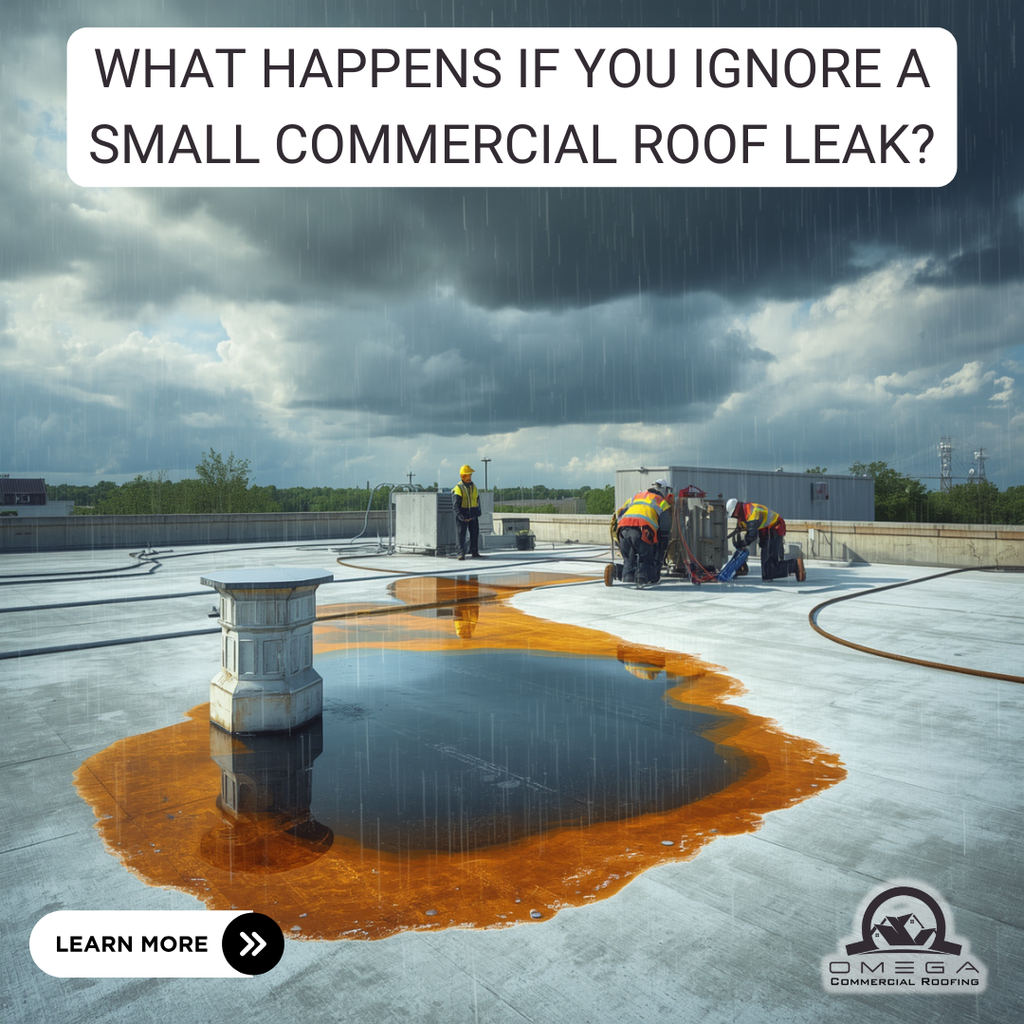
- Ponding water
- Deteriorated sealants
- Damage around HVAC equipment or other rooftop components
A professional inspection can help determine whether you’re dealing with an isolated repair or a condition that warrants a broader roofing solution.
What Are the Warning Signs of a Commercial Roof Leak?
An active drip is an obvious sign, but commercial roof leaks aren’t always that noticeable.
Business owners and facility managers should watch for:
- Ceiling stains or discoloration
- Damp ceiling tiles
- Water spots on walls
- Bubbling or peeling paint
- Unexplained moisture
- Musty odors
- Water appearing after heavy rain
- Recurring leaks in the same general area
- Visible membrane damage
- Ponding water on a flat roof
If something doesn’t look right, it’s worth having it evaluated.
Don’t Wait for the Next Storm to Find Out
A common mistake is waiting to see whether a suspected leak happens again.
If water has already entered the building, there is a reason it got there.
The absence of visible water during the next storm doesn’t necessarily mean the roofing issue has disappeared. Wind direction, rainfall intensity, snow, and other conditions can affect when and how water enters a building.
A commercial roof inspection provides a better understanding of what’s happening above your ceiling.
What Does a Commercial Roof Inspection Include?
At Omega Commercial Roofing, we evaluate the condition of your commercial roofing system and look for potential sources of leaks, storm damage, wear, and other concerns.
Our inspections include photographs and documentation of our findings so you have a clearer picture of your roof’s condition.
Depending on the building and roofing system, we may evaluate areas such as:
- Roofing membranes and surfaces
- Seams
- Flashing
- Roof penetrations
- Drainage areas
- Signs of ponding water
- Previous repair areas
- Visible deterioration or damage
From there, we can discuss appropriate next steps based on what we find.
Repairing a Commercial Roof vs. Replacing It
Finding a leak doesn’t automatically mean you need a new roof.
Depending on the roof’s age, condition, roofing system, and extent of the damage, a targeted repair may be appropriate. In other situations, repeated leaks or widespread deterioration may indicate that a larger repair or replacement should be considered.
The goal of an inspection is to gather the information needed to make an informed decision—not to assume every roofing problem requires the same solution.
Schedule a Commercial Roof Inspection in Southern Idaho
If you’ve noticed a water stain, drip, damaged roofing material, or another potential sign of a commercial roof leak, don’t wait for Southern Idaho’s winter weather to put the problem to the test.
Omega Commercial Roofing provides commercial roof inspections, maintenance, repairs, and complete roofing systems for businesses throughout Idaho’s Magic Valley, including Burley, Twin Falls, Rupert, Heyburn, Jerome, Buhl, and surrounding communities.
A small problem is easier to address when you know it’s there.
Contact Omega Commercial Roofing today at (208) 358-8258 to schedule your commercial roof inspection and find out what’s really happening with your roof.